

Everything feels urgent.
Nothing actually finishes.
Changes helped at first. Visibility faded. Results became harder to explain or defend.
If this feels familiar, you’re not alone
This is not a motivation or effort problem.
Every request is “important”
Priorities change daily
The team is busy but progress is unclear
Work moves, but outcomes don’t land
Improvements are always postponed
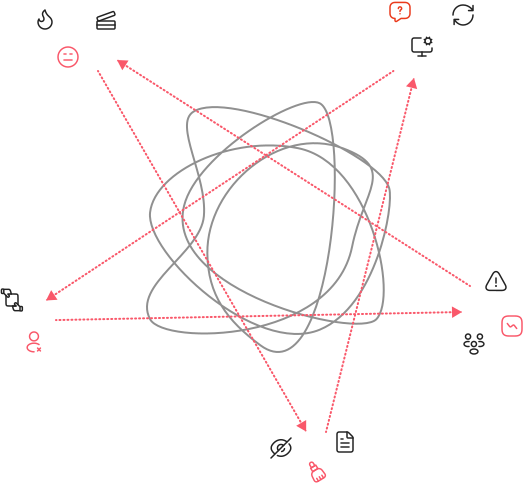
Structural bottlenecks vs. Scalable systems
If Lean really pulled the andon cord, defects would never pass the office.
This isn’t a capacity problem. It’s a visibility and execution problem.
Work enters faster than it exits
Ownership becomes unclear
Follow-ups replace flow
Results depend on individual compensation, not system reliability
Decisions are made on noise, not facts
Urgency hides bottlenecks instead of resolving them.
When execution becomes visible:
Fewer priorities move faster
Bottlenecks surface early
Ownership is clear without escalation
Follow-up drops because flow improves
Teams regain capacity without hiring
Progress becomes predictable again.
Start with Execution Clarity
Before automating or changing structure, teams need to see:
Where work actually stalls
These are the specific points where progress slows down or stops, usually due to complex approval layers, unclear ownership, or dependencies that create unnecessary wait times.
What creates constant urgency
The noise generated by poor planning and shifting priorities, forcing the team to spend their energy on "firefighting" instead of meaningful execution.
Which work deserves protection
The core strategic work that moves the needle. It requires dedicated, uninterrupted time to ensure quality and long-term results aren't sacrificed for short-term fixes.
See how teams are fixing this
No demo. No sales call. Just clarity on where to start.