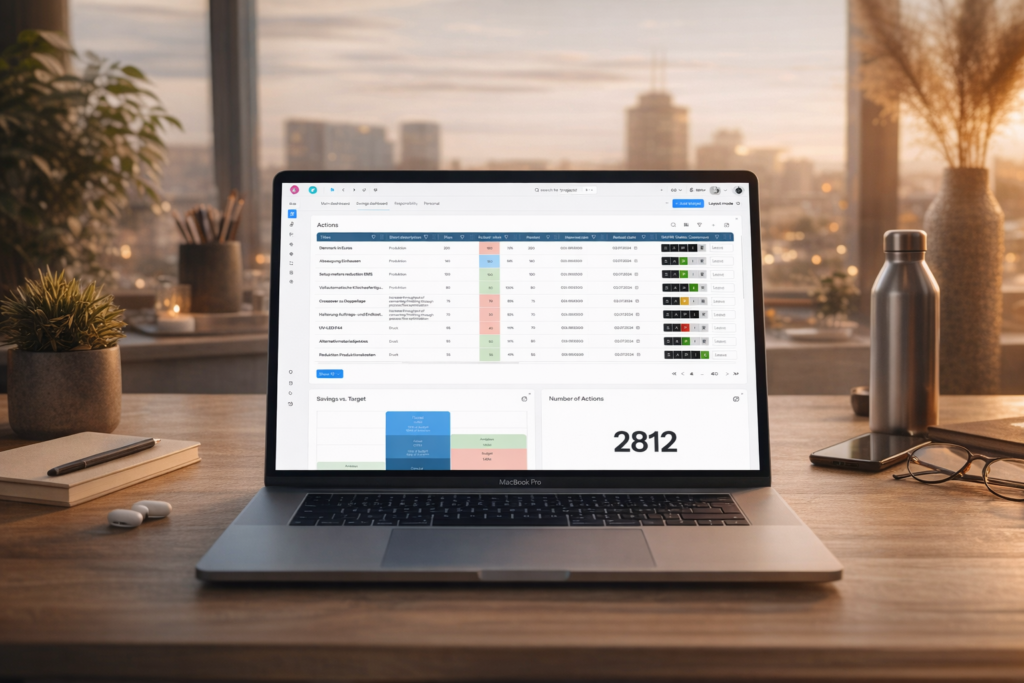
Achieve 10-25% Savings with OPEX and Continuous Improvement
General Business Impact
What is the potencial annual savings for a company that implements OPEX and Continuous Improvements principles?
Based on available information, a company utilizing Operational Excellence (OpEx) and Continuous Improvement principles, such as Kaizen, can achieve significant cost savings.
Specifically, organizations have reported savings of 10% within 12 months and up to 25% over three years, which averages to an annual savings potential of approximately 8-10%.
Read more
Actual savings depend on the company’s starting point and the rigorous implementation of OpEx principles. Organizations that fully commit to these strategies may achieve even greater efficiencies and cost reductions.
These savings can be realized through various initiatives without workforce reductions.
Key areas for optimization include:
Making IT systems and networks more efficient
Improving support for employees
Organizing tasks better using frameworks like ITIL
Streamlining how the company buys resources
Getting more value from assets through better management
How long does it take to see measurable results with continuous improvements?
Timeframe
Improvement
1-2 Months
🚀 Short-term Results: Initial improvements like higher energy, better mood, and small efficiency gains.
2-3 Months
⚡ Substancial Improvements: Noticeable increase in productivity and efficiency after consistent implementation.
3-6 Months
💡 Significant Impact: Substantial improvements in processes and performance become evident.
6+ Months
📈 Long-term Results: Sustainable improvements, especially in large organizations, begin to show.
18 Months
💰 Cost Reduction: 10-20% reduction in operating costs through continuous improvement (McKinsey study).
Unlocking Operational Efficiency with Kaizen and Automation
Operational Efficiency
How much time can your team save by automating repetitive task using Kaizen principles?
Up to 40% of development time can be saved through AI-powered automation tools that integrate Kaizen principles. This time savings allows teams to focus on more valuable activities like innovation and delivering core business value.
Read more
The Kaizen approach emphasizes continuous small improvements, which can lead to substantial time savings when applied consistently over time.
Automating repetitive tasks not only saves time directly, but also reduces errors and improves overall efficiency.
By leveraging these automation capabilities, teams can eliminate many time-consuming manual tasks and redirect their efforts to higher-value work. The cumulative effect of these small, continuous improvements can lead to significant productivity gains over time.
First year of reduction
Operational Efficiency
How much cost reduction can companies achieve in their first year with continuous improvements?
10% to 20% cost savings across a broader cost base through an end-to-end approach.
Over 10% cost reduction, with half coming from labor cost reductions, as demonstrated by an international chemicals company.
Approximately 28% of all improvements have a financial impact, which includes both cost savings and revenue increases.
An average of $70,000 in first-year cost savings per cost-saving improvement idea, with about 12% of all improvements resulting in cost savings.
Time savings improvements, which occur in about 15% of all improvements, result in an average estimated value of $6,000 in the first year.