


Introduction

Kaizen workshops are a powerful way for small and medium-sized enterprises (SMEs) to surface improvement ideas, reduce waste and boost productivity. Yet many organizations find that workshop energy fades and expected results don’t last. Sustainable implementation requires governance, repeatable practices and a clear scaling path.
1. Start with clear outcomes
Define concrete, measurable outcomes before running workshops. Typical outcome categories: lead time reduction, defect rate reduction, cost avoidance, and employee engagement. Frame each Kaizen activity with a specific target, owner and timeline so outcomes become accountable deliverables instead of one-off exercises.
2. Governance: roles, responsibilities and decision rights
Effective governance assigns who approves improvements, who funds pilots and who removes cross-functional blockers. Recommended governance elements:

- Steering Committee: senior sponsors who set strategic priorities and approve scaling.
- Implementation Board: operational leaders who prioritize projects and allocate resources.
- Process Owners: accountable for sustaining improvements in their area.
- Improvement Coaches/Facilitators: drive methodology, training and review cadence.
3. Standardization and documentation
Create lightweight but enforceable standards for documenting Kaizen experiments: hypothesis, baseline metrics, countermeasures, test plan, results and sustainment checklist. Store templates in a central repository (sharepoint, intranet or a dedicated improvement management tool) to enable reuse and auditability.
4. Build internal capability
Scaling depends on people. Invest in a multi-tier training model:
- Awareness sessions for all staff (what Kaizen means, benefits, expected behavior).
- Practical workshops for team leads (tools, problem-solving routines).
- Coach certification for internal facilitators who run workshops and mentor teams.
5. Scaling: staged rollout
Use a staged approach to scale successful pilots:
- Pilot: run in one team/line to prove value and refine methods.
- Repeatable Model: document the process, templates and training package.
- Rollout Wave: expand to similar units in waves, supported by trained coaches.
- Enterprise Integration: embed improvements into standard operating procedures and performance reviews.
6. Metrics, dashboards and feedback loops
Track both outcome and process metrics. Examples:
- Outcome: cycle time, first-pass yield, cost per unit, customer satisfaction.
- Process: number of active Kaizen projects, percent sustained after 6 months, training completion rate.
Publish dashboards for transparency. Hold monthly review meetings to surface blockers and celebrate wins.
7. Technology and tools
Choose tools that match company scale and capability. Typical options:
- Collaboration platforms (internal wiki, SharePoint) for templates and knowledge.
- Improvement tracking tools (Jira, Trello, or specialized Lean management software) for project lifecycle.
- Analytics dashboards (Power BI, Tableau) for KPI monitoring.
8. Change management and culture
Kaizen isn’t one-time training; it’s a cultural shift. Encourage psychological safety, reward small improvements and embed improvement discussions into daily routines (stand-ups, Gemba walks). Leadership must visibly sponsor improvements and allocate time for staff to participate.
9. Services to accelerate implementation
SMEs often benefit from blending internal effort with external help. Typical Services we recommend:
- Assessment Service: rapid maturity assessment to identify gaps in governance, capabilities and tooling.
- Design & Pilot Service: co-design Kaizen templates, run initial pilot workshops and produce a rollout playbook.
- Coach-as-a-Service: interim improvement coaches to train internal facilitators and support early waves.
- Tooling & Dashboard Service: set up tracking boards and KPI dashboards aligned to your processes.
Use Services to transfer knowledge fast, then internalize capability for sustainable operation.
10. CTA rules for effective stakeholder engagement
When asking stakeholders to act, follow these CTA rules:
- Be specific: state the exact action, owner and deadline (e.g., “Approve pilot budget: CFO, by April 30”).
- Show value: attach expected benefits and metrics to each CTA.
- Limit asks: one clear CTA per communication to avoid decision paralysis.
- Provide next steps: templates, calendar invites and quick links to resources.
11. Internal links (examples to include in company posts)
Link improvement initiatives into your knowledge ecosystem. Example internal links to create:
- /intranet/kaizen-playbook — central templates and guidelines
- /teams/improvement-coaches — directory of certified facilitators
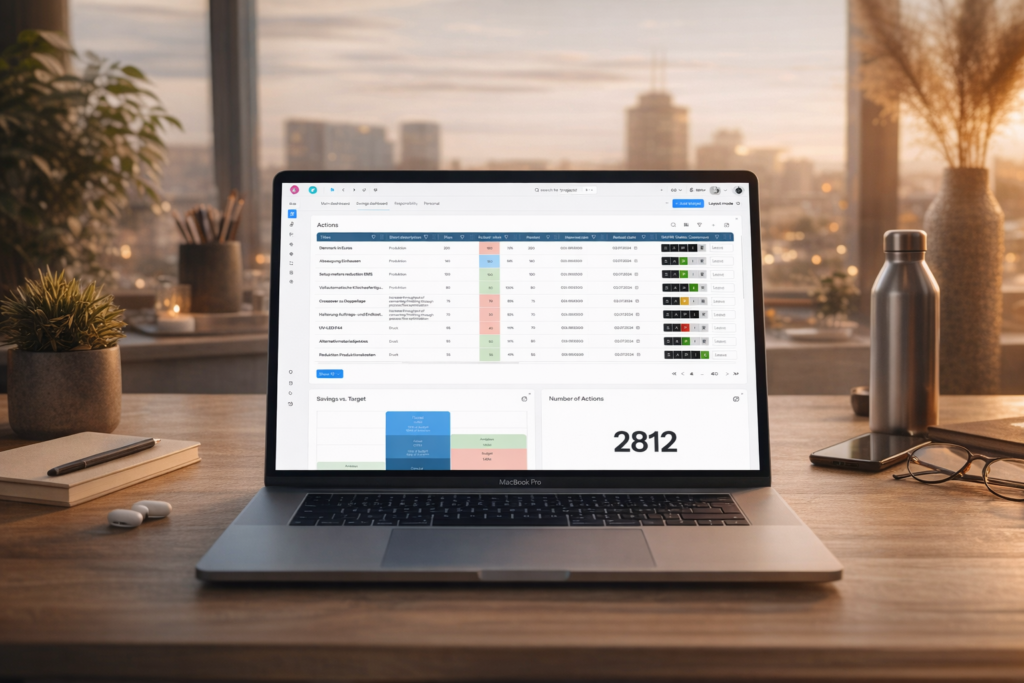
- /reports/kaizen-dashboard — live KPI dashboard
- /services/assessment — details of Assessment Service
12. Short SME case example
Manufacturing SME: Pilot on one assembly line reduced cycle time by 18% within 8 weeks using a focused Kaizen workshop, a single full-time coach and a monthly governance review. After wave rollouts supported by two certified internal coaches, improvements were standardized in SOPs and sustained over 12 months. Key success factors: senior sponsor, measurable targets, coach handover plan.
Conclusion and next steps
Turning Kaizen workshops into sustainable, scaled improvements is achievable for SMEs with a pragmatic governance model, repeatable documentation, capability building and selective use of Services. Begin with a focused pilot, track the right metrics and use clear CTAs to mobilize stakeholders.
Need a practical playbook to start? Consider our Assessment Service to identify the fastest path to scale.
FAQ
How quickly can an SME expect results from Kaizen workshops?
Initial improvements can appear within weeks on a focused pilot. Sustainable, enterprise-wide change generally takes 6–12 months depending on complexity and available coaching resources.
What governance roles are essential for sustaining Kaizen?
Essential roles include a senior Steering Committee sponsor, an Implementation Board for prioritization, Process Owners for sustainment and Improvement Coaches for day-to-day facilitation and training.
When should we use external Services versus building everything internally?
Use external Services for rapid assessment, pilot setup and coach-as-a-service when internal capability is limited. Transition to internal facilitators as skills and confidence grow to ensure long-term sustainability.
Ready to scale your Kaizen results?
Book a 30-minute Assessment Service to map governance gaps and a pilot plan. We’ll deliver a tailored playbook and a recommended rollout wave.
CTA rules: one clear action, named owner, and suggested deadline. Example: Approve pilot budget — CFO — within 7 days.