

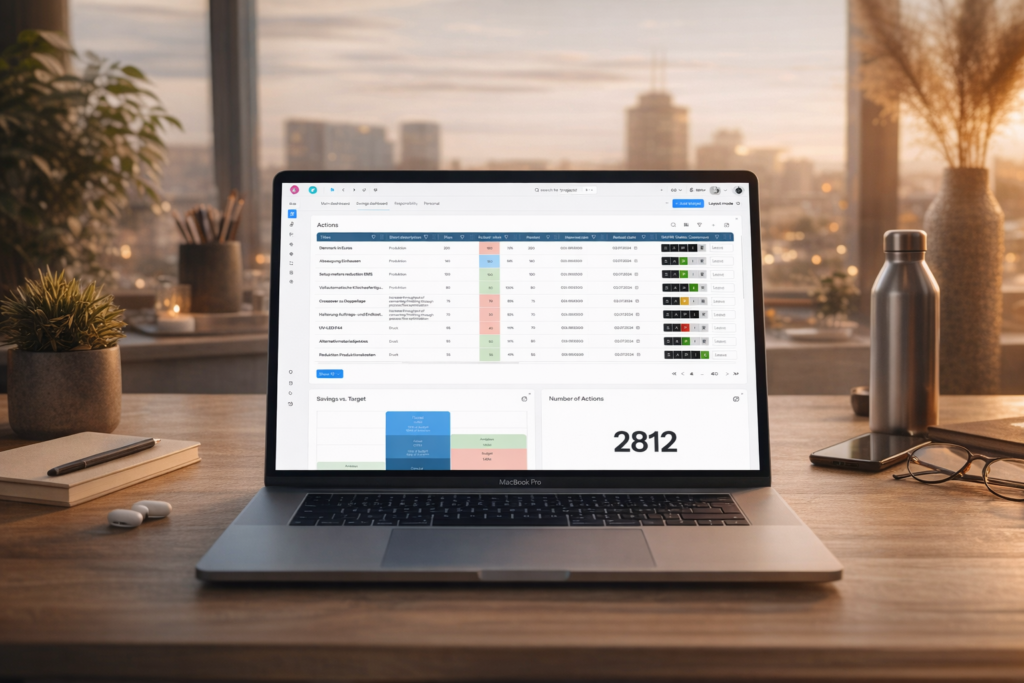

For many German Mittelstand companies, continuous improvement (CI) is already a strategic priority — but turning improvement ideas into scalable, repeatable outcomes requires the right mix of culture, process and software. This article shows a practical, step-by-step approach to establish a CI culture using software and automation so you can accelerate problem solving, scale best practices and link improvements to measurable business value.

Why the Mittelstand needs Continuous Improvement and software
Mittelstand firms excel in craftsmanship, customer focus and operational know-how. Yet common challenges slow improvement: improvements remain local and undocumented, improvement cycles are long, and insights are lost when people move roles. CI software addresses these issues by:
- Capturing and standardizing improvement ideas and countermeasures in a single place
- Making progress visible through workflows, dashboards and automated notifications
- Enabling knowledge reuse across sites, teams and shifts
- Integrating with automation to reduce manual work and error-prone handoffs
Core principles of a CI culture
- Leadership commitment: Leaders must visibly support CI and allocate time and budget.
- Psychological safety: People should feel safe proposing experiments and admitting problems.
- Small, evidence-based experiments: Use PDCA/A3 thinking and measure results.
- Standardize and spread: When an experiment works, standardize and roll it out.
- Continuous learning: Treat failures as learning opportunities and document lessons.
Selecting the right CI software and automation services
Not all tools are equal. Choose software that matches your improvement maturity, integrates with existing systems and supports your workflows. Look for:
- Visual workflows and A3/PDCA templates
- Role-based access and clear accountability (owner, approver, reviewer)
- Automated reminders and escalation rules to keep actions on track
- Dashboards for leaders and operators with configurable KPIs
- APIs or built-in automation connectors to trigger actions (e.g., work orders, alerts)
Explore practical solutions and examples at your fingertips: learn about CI-focused apps and approaches at GetBelean’s resources on operational excellence and CI (Opex App, Continuous Improvement), and how automation can accelerate results (Automation).

Step-by-step plan to implement CI with software
- Define target outcomes and sponsorship
Start with 2–3 measurable outcomes (e.g., reduce scrap by X%, cut lead time by Y%). Secure an executive sponsor and a cross-functional steering team.
- Map current processes and identify hotspots
Use simple process mapping sessions to find recurring issues and quick wins. Prioritize based on impact and frequency.
- Choose pilot areas and scope
Pick one plant, line or business unit for the pilot. Keep scope narrow so you can iterate quickly.
- Deploy CI software for the pilot
Configure templates (A3, PDCA), set roles and create dashboards. Integrate only what’s needed for the pilot to avoid scope creep.
- Train coaches and operators
Run short, hands-on workshops focused on the software and CI methods. Pair experienced coaches with operators during the first weeks.
- Run rapid experiments and document results
Encourage many small experiments. Use the software to log hypothesis, actions, metrics and lessons learned.
- Standardize and scale
After validated improvements, capture standard work in the tool and replicate to other areas using templates and playbooks.
- Govern and sustain
Establish regular reviews (weekly stand-ups, monthly steering) and automate reminders and escalation within the software.
Change management: training, incentives and governance
A CI culture is social as much as technical. Practical measures:
- Deliver role-specific training (leaders, coaches, operators) with real work examples.
- Create visible recognition: short case studies, bulletin boards, monthly showcases.
- Link CI activities to performance reviews and capacity — protect operator time for improvement work.
- Use governance: define owners for each improvement, set SLAs for actions, and automate follow-ups.
Measuring success: KPIs and dashboards
Track a mix of leading and lagging indicators. Examples:
- Leading: number of experiments run, % of actions completed on time, cross-site knowledge reuse
- Lagging: defect rate, lead time, uptime, cost savings
- Engagement: number of contributors, improvements per 100 employees
Use dashboards for different audiences: operators need daily work items; managers need progress and blockers; executives want impact on strategic KPIs. Configure automated reports to reduce manual status meetings.
Common obstacles and how to overcome them
- Too much focus on tools: Software is an enabler, not a substitute for coaching. Balance coaching and automation.
- Data silos and poor integrations: Start with manual integrations or simple APIs and expand once processes stabilize.
- Low adoption: Keep the tool simple, demonstrate quick wins, and embed usage in daily routines.
- Short-term thinking: Protect time for experiments and track cumulative improvements over time.
Next steps and resources
Start small, measure early, and scale what works. If you want practical examples and tools to support your journey, review GetBelean’s Operational Excellence and CI resources and consider automation options to accelerate results: Opex App, Continuous Improvement, Automation. For company information and contacting experts, visit GetBelean.
FAQ
What is the first step for Mittelstand companies starting a CI program with software?
Define 2–3 measurable outcomes and secure executive sponsorship. Start with a narrow pilot area to validate the approach before scaling.
How much does CI software change daily operations?
Properly implemented CI software should augment existing routines, making issues visible and automating follow-ups. The goal is to reduce admin work while increasing structured problem solving, not to add bureaucracy.
How do you measure the impact of CI activities?
Use a mix of leading (experiments run, actions completed) and lagging indicators (defects, lead time, cost savings). Dashboards and automated reports help link CI work to business KPIs.
Ready to scale Continuous Improvement?
Start with a pilot that combines coaching, structured methods and automation. Discover examples and services to accelerate your CI program at GetBelean, or contact our experts to plan a tailored rollout.