

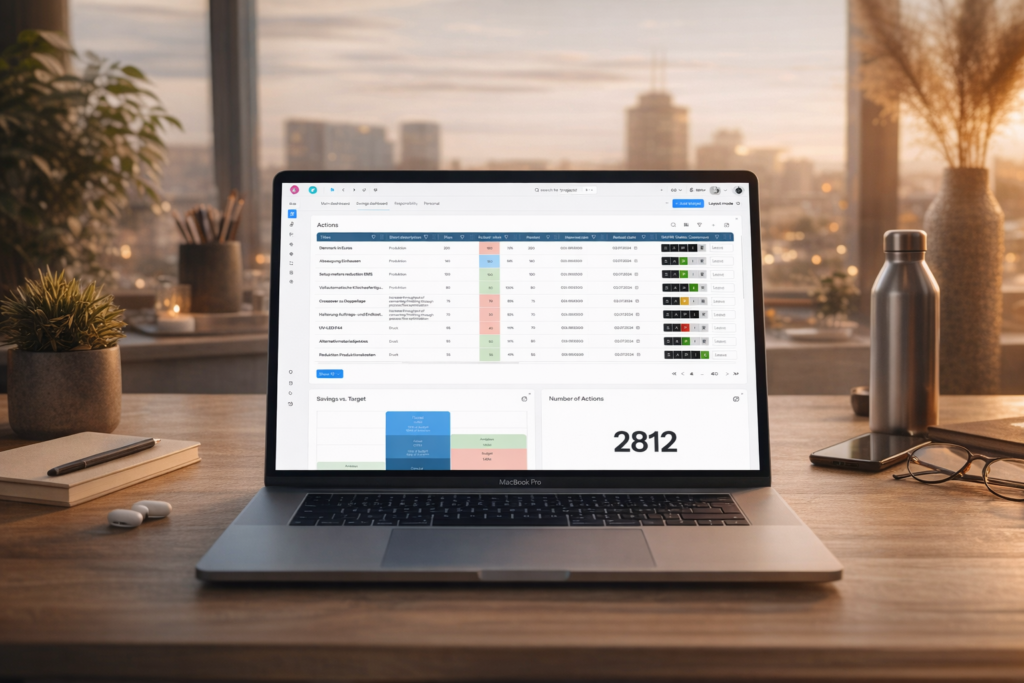


Why Scope 3 matters for manufacturers
Scope 3 emissions—indirect emissions across the value chain—often represent the largest portion of a manufacturing company’s carbon footprint. For mid‑market, industrial and automotive firms, understanding and reducing these emissions is essential for risk management, customer requirements and compliance with evolving green standards.
Common challenges in Scope 3 accounting
- Fragmented supplier data: multiple formats, infrequent updates.
- Complex emission factors: product mixes, transport modes, end‑of‑life impacts.
- Resource constraints: limited in‑house sustainability staff and manual processes.
- Traceability gaps: hard to link spend or activity to accurate emissions.
Principles of automation: data, processes, governance
Automation succeeds when it is built on three pillars:
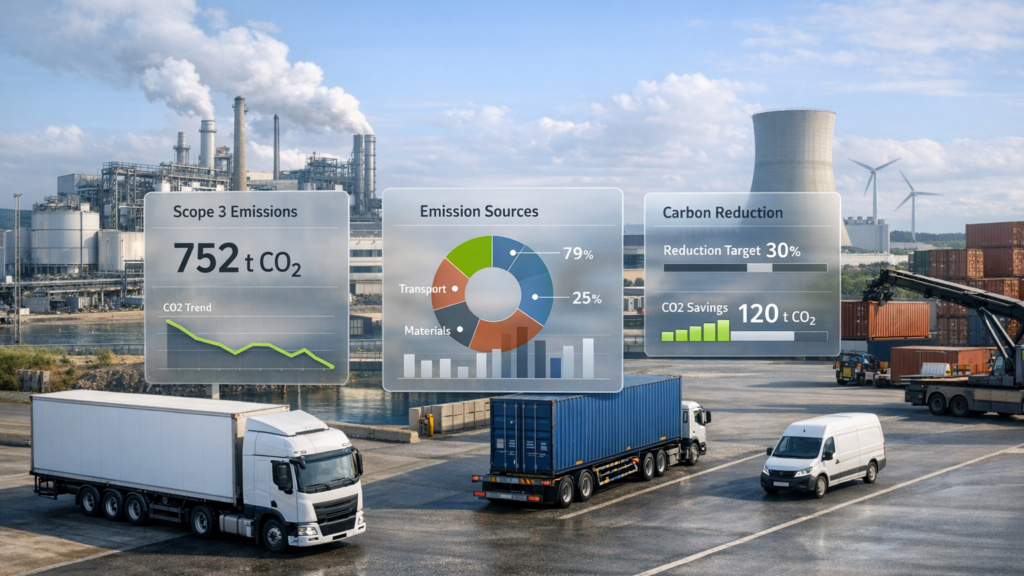
- Data model: a consistent schema for suppliers, spend, materials and transport.
- Process orchestration: automated collection, validation and calculation workflows.
- Governance: roles, thresholds, audit trails and versioned emission factors.
Step‑by‑step approach to automate Scope 3
- Map your value chain. Start with the highest‑impact categories for manufacturing (purchased goods & services, upstream transportation, fuel‑ and energy‑related activities). Use procurement and ERP data to identify major suppliers and spend buckets.
- Standardize supplier inputs. Create a concise supplier data request: activity volumes, material composition, logistics distances, and purchased energy. Where direct data is unavailable, capture proxies (e.g., spend, product weight) for estimation.
- Automate data collection. Replace ad‑hoc emails with digital forms, supplier portals or API-based ingest. Automated reminders and validation rules increase response rates and data quality.
- Apply an auditable calculation engine. Use a rule‑based engine to map inputs to emission factors and generate category totals. Ensure emission factors are versioned and sourced from recognized databases.
- Integrate with existing systems. Connect ERP, procurement, logistics and sustainability platforms so updates flow into the calculation engine without manual re‑entry.
- Prioritize hotspots and reduction levers. Rank suppliers and categories by absolute emissions and abatement cost. Focus on material substitutions, design changes, logistics optimization and supplier efficiency programs.
- Report and verify. Automate standardized reports and export data for third‑party assurance or regulatory submissions. Maintain traceability for every calculation.
Key tools and integrations manufacturers need
Successful automation typically combines:
- Supplier portals / e‑forms for structured data collection.
- ETL and data validation layers that normalize ERP and procurement outputs.
- A calculation engine with configurable emission factor mappings and audit logs.
- Dashboards for hotspot analysis and progress tracking.
- APIs to integrate logistics providers, PLM/ERP and accounting systems.
For guidance on aligning automated workflows with regulatory expectations and green standards, review our practical resources on regulatory compliance automation:
- Regulatory Compliance Automation — Green Standards (overview)
- Regulatory Compliance Automation — Data & Workflows
- Regulatory Compliance Automation — Supplier Engagement
- Regulatory Compliance Automation — Reporting & Assurance
Prioritizing reduction levers across the supply chain
Once emissions are quantified, reduce them by combining quick wins and strategic initiatives:
- Procurement levers: specify low‑carbon materials, set supplier performance targets, include CO2 criteria in RFQs.
- Design & engineering: material efficiency, modularity and lightweighting to lower upstream impacts.
- Logistics: optimize routing, consolidate shipments, shift to lower‑emission modes.
- Supplier programs: provide training, co‑fund efficiency upgrades, and support renewable energy procurement.
Reporting, verification and regulatory readiness
Automated systems should produce consistent, auditable outputs aligned with standards (GHG Protocol, ISO 14064) and enable exports for assurance. Build version control for emission factors and maintain a log of supplier inputs and calculation steps to simplify audits and demonstrate compliance.
Case actions and next steps for industrial teams
- Run a 90‑day pilot targeting one high‑impact spend category to validate data flows and calculation logic.
- Establish governance: assign owners for supplier engagement, data quality and reporting cadence.
- Scale by integrating more suppliers and categories once the pilot demonstrates reliable outputs.
Automating Scope 3 accounting transforms an overwhelming task into a repeatable business process. It reduces manual effort, improves data quality and reveals the most effective levers to cut supply‑chain CO2—critical for manufacturers facing customer, investor and regulatory pressure.
Weiterfuehrende Inhalte
- Regulatory Compliance Automation for Green Standards — Efficient Compliance for Mittelstand to Enterprise
- Regulatory Compliance Automation for Green Standards — Efficient Compliance for SMEs to Automotive
- Regulatory Compliance Automation for Green Standards — Efficiently Meeting Requirements for Mittelstand to Enterprise
- Regulatory Compliance Automation for Green Standards — Efficiently Meet Environmental Rules
FAQ
Which Scope 3 categories matter most for manufacturers?
Typically purchased goods & services, upstream transport, use of sold products (for some industries) and end‑of‑life. Prioritize categories by spend and expected emission intensity to focus resources where they deliver most impact.
Can I estimate Scope 3 emissions if suppliers don’t provide data?
Yes. Use spend‑based proxies, weight‑based estimates or industry average emission factors as interim measures, but track data quality and progressively replace proxies with supplier‑specific data.
How does automation help with regulatory compliance?
Automation enforces consistent data models, calculation rules and audit trails, making it easier to produce standardized reports and export evidence for third‑party verification or regulatory submissions. See our regulatory automation resources for details.
What integrations are most valuable for Scope 3 automation?
ERP/procurement systems, logistics/TMS platforms, supplier portals and sustainability reporting tools. These integrations reduce manual entry and keep data current.
Ready to make Scope 3 measurable and manageable? Start with a focused pilot and standardized supplier workflows. Learn how to align automated processes with green standards: Overview, Data & Workflows, Supplier Engagement, Reporting & Assurance.