

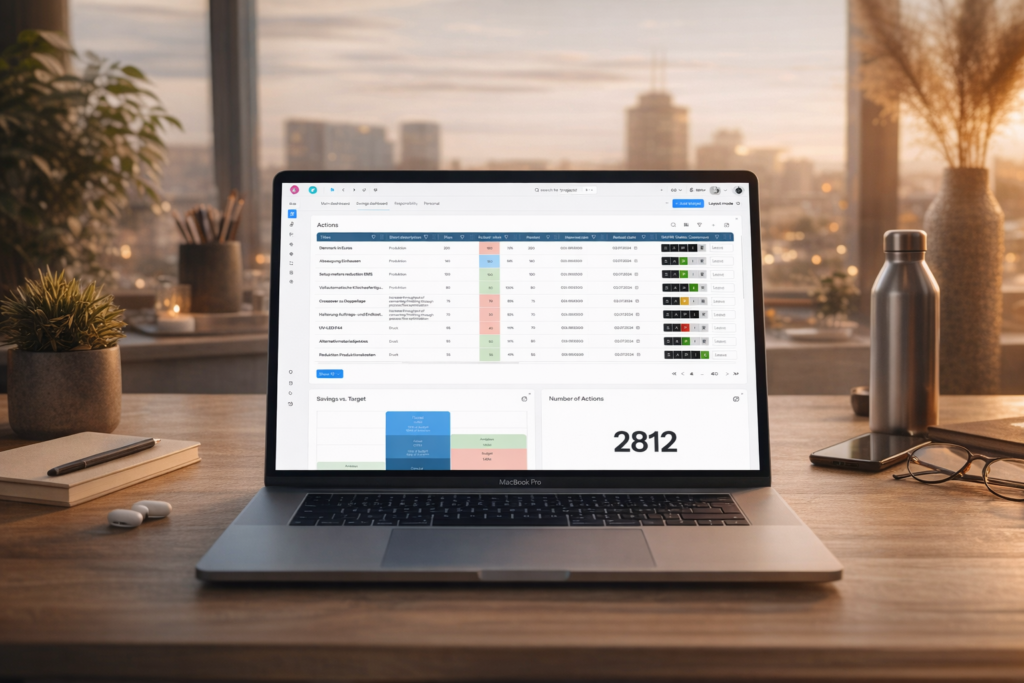
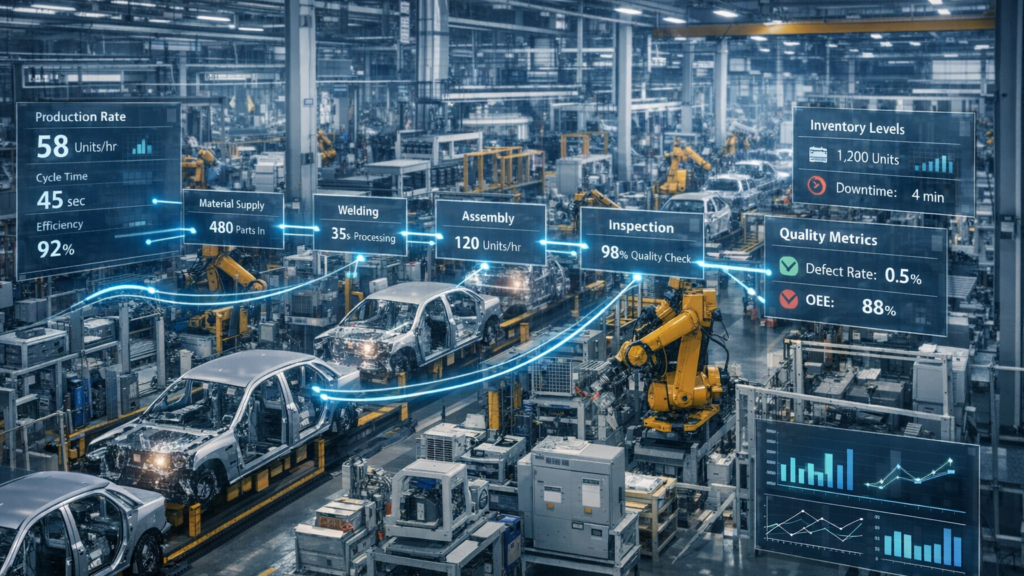

Traditional Value Stream Mapping (VSM) is a proven method to visualize material and information flow. But static maps built from periodic observations and spreadsheets can miss variability, hide root causes and slow down improvement cycles. Automated value stream analysis that uses live data brings VSM into operational reality: continuous visibility, faster decisions and measurable impact across production and supply chains.
What automated value stream analysis with live data means
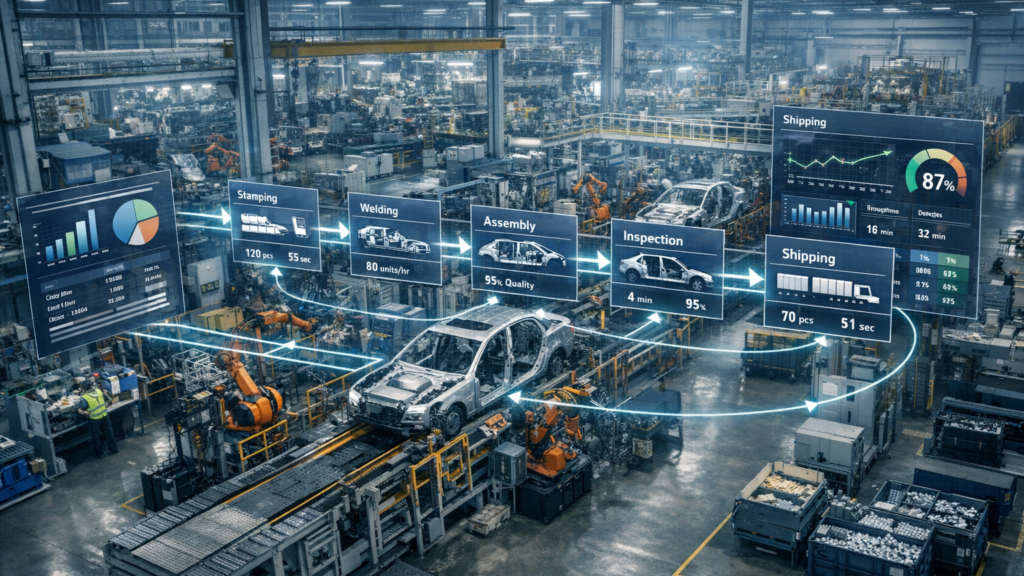
At its core, this approach connects real-time production and IT systems to create continuously updated value stream visualizations. Live signals (machine telemetry, MES events, ERP transactions, IoT sensors) feed a central layer that aggregates, normalizes and visualizes process steps, queues, changeovers and takt performance — often on dashboards or digital pinboards accessible to operations teams.
Primary benefits for manufacturing, automotive and enterprise
- Faster root-cause discovery: Live trends expose where variability originates, reducing time-to-resolution.
- Continuous improvement cadence: Teams are empowered to act on current data rather than outdated snapshots.
- Accurate lead time and WIP visibility: Realtime WIP counts and flow rates remove estimation errors from planning.
- Scalable across plants: Standardized data models let enterprises compare lines, sites and suppliers objectively.
- Improved OEE and throughput: Immediate detection of stoppages and micro-stops supports quicker recovery.
Required components
- Data sources: PLCs, SCADA, MES, ERP, barcode/RFID systems, quality inspection devices and sensors.
- Integration layer: Middleware or IIoT platforms to collect, cleanse and timestamp events consistently.
- Data model: A normalized representation of process steps, material flows, and work centers to allow cross-site comparison.
- Visualization and analytics: Dashboards, maps and alerts tailored to roles — operators, supervisors, and continuous-improvement leads.
- Governance and change management: Data ownership, update cadences, and training to keep insights actionable.
Step-by-step implementation roadmap
- Define the use cases: Prioritize where live VSM will deliver quick impact — e.g., a bottleneck line, complex assembly or supplier inbound flow.
- Map minimal data requirements: Identify the signals needed to represent each process step (cycle time, uptime, queue size, yield).
- Connect and validate: Integrate sources, validate timestamps and align event semantics across systems.
- Model and visualize: Build the value stream model and expose live dashboards with drill-down capability.
- Embed into daily routines: Use live maps in stand-ups, Gemba walks and performance reviews to close the Kaizen loop.
- Scale iteratively: Standardize templates, extend to other lines or sites and refine alerts and KPI thresholds.
Key metrics to track with live VSM
- Throughput and takt adherence
- Work-in-process (WIP) by process step
- Average and 95th percentile lead time
- Availability, performance and quality components of OEE
- Queue time vs processing time ratios
- First-pass yield and rework rates
Common risks and how to avoid them
- Data noise and misalignment: Start with a validated minimal dataset and add signals progressively.
- Siloed ownership: Assign clear data stewards and involve operations early to ensure trust in the metrics.
- Overloading dashboards: Present role-specific views; operators need different granularity than managers.
- Neglecting human workflows: Integrate live insights into daily routines rather than expecting reactive, ad-hoc use.
Quick checklist to get started
- Choose a pilot line with clear improvement potential.
- Inventory available digital signals and gaps.
- Define 3–5 KPIs to measure impact.
- Deliver a live dashboard for daily use within 4–8 weeks.
- Plan training and governance to sustain adoption.
Automated value stream analysis does not replace the thinking behind VSM — it strengthens it. By combining the discipline of value stream mapping with continuous, live data, manufacturers and automotive suppliers can shorten improvement cycles, resolve variability faster and scale best practices across sites.
Learn more about operational-excellence tools and live data approaches on our insights page: Operational Excellence App.
Weiterfuehrende Inhalte
FAQ
Is live value stream mapping suitable for small and medium-sized manufacturers?
Yes. Start small with a focused pilot line and a limited set of signals. Many SMEs can leverage existing PLC/MES data or simple IoT sensors to get immediate visibility without large upfront investments.
Which systems typically feed an automated VSM solution?
Common sources are PLCs, SCADA, MES, ERP transactions, barcode/RFID readers and quality inspection devices. The key is consistent timestamps and event definitions.
How do you keep dashboards from overwhelming users?
Design role-specific views, show only actionable KPIs, and provide drill-downs. Embed the dashboards in daily routines so they become part of decision-making rather than noise.
Ready to modernize your Value Stream Mapping with live data? Explore our Operational Excellence App and start a pilot: Operational Excellence App