

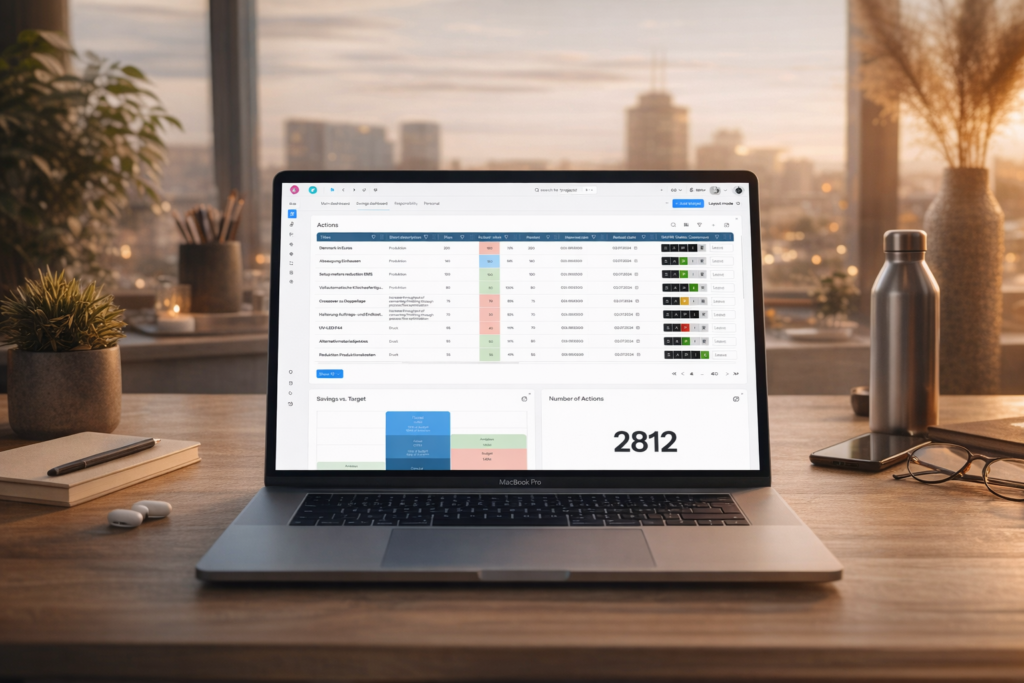


Closed-Loop CAPA 4.0 describes a digitally integrated system that detects quality or process issues, triggers corrective and preventive actions, executes remediation steps where possible, and closes the loop with verification and continuous improvement — with minimal manual handoffs. It combines automated detection (sensors, MES, ERP), rule-based workflows, analytics and verification to reduce cycle time from problem discovery to validated resolution.
Why automation matters for CAPA in manufacturing
Manual CAPA processes are slow, error-prone and lack traceability. For manufacturers — from mid-market suppliers to large automotive OEMs — those weaknesses mean recurring defects, audit findings and higher costs. Automation brings consistency, faster containment, and auditable evidence while freeing engineers to focus on root-cause work.

Key components of a Closed-Loop CAPA 4.0 system
- Automated detection: Real-time inputs from production lines, quality inspections, and customer feedback.
- Rule-based triggering: Predefined business rules and thresholds that generate CAPA tasks automatically.
- Orchestrated workflows: Digital tasks assigned to the right roles with escalation and approvals.
- Root-cause analysis tools: Integrated data and analytics to accelerate cause identification (trend analysis, SPC).
- Automated corrective actions: Direct actions where possible — e.g., machine parameter adjustments, barcode holds, or process locks.
- Verification & closure: Automated validation tests, sampling plans and documented evidence to close CAPAs.
- Continuous feedback: Feed outcomes back into process controls and knowledge bases to prevent recurrence.
Benefits by company size and sector
- SME / Mid-market: Faster containment reduces scrap and rework costs. Automation scales expertise and enforces standard procedures without large quality teams.
- Industrial & Enterprise: Improved traceability and audit readiness, reduced downtime through faster corrective loops, and centralized analytics across sites.
- Automotive: Meets stringent audit and supplier requirements, shortens response for field escapes and warranty events, and supports continuous improvement required by OEMs.
Implementation roadmap — practical steps
- Assess maturity: Map current CAPA workflows, data sources and pain points.
- Prioritize use cases: Start with high-frequency or high-cost failures (e.g., assembly defects, supplier nonconformances).
- Integrate data sources: Connect MES, ERP, QMS and field feedback for a single signal of truth.
- Design automated rules & workflows: Define triggers, responsibilities, SLAs and escalation paths.
- Enable automated actions: Identify which remediations can be executed automatically (machine settings, quarantine, notifications).
- Validate & scale: Pilot on one line/site, measure impact, then roll out with standard templates.
- Governance: Maintain process owners, document control and periodic reviews to keep rules relevant.
Data, KPIs and measuring ROI
Track these KPIs to justify investment and guide continuous improvement:
- Time to detect (TTD) and time to contain (TTC)
- Time to close CAPA
- Repeat incident rate / recurrence rate
- Scrap, rework and warranty costs avoided
- Audit findings and supplier corrective metrics
Combine hard savings (reduced scrap, fewer recalls) with soft gains (faster audits, capacity freed for value work) to calculate ROI.
Common pitfalls and how to avoid them
- Over-automation: Automating inappropriate actions can create new risks. Start with reversible, low-risk automations.
- Poor data quality: Garbage in, garbage out. Invest in data validation and sensor calibration first.
- No governance: Automation without ownership leads to stale rules and missed signals—assign process owners and review cycles.
- Ignoring change management: Engage operators and engineers early; provide clear SOPs and training.
Quick checklist to get started
- Identify top 5 recurring failures and quantify cost.
- Map current CAPA flow and data sources for those failures.
- Define which containment and corrective steps can be automated safely.
- Run a short pilot and track the KPIs above.
- Use lessons from the pilot to scale and update corporate standards.
Automation plays a central role in turning CAPA from a reactive, manual burden into a predictable, auditable engine of continuous improvement. For manufacturers seeking tangible impact, integrating automation into CAPA workflows reduces cycle time, lowers costs and strengthens compliance.
Learn how automation can be applied to manufacturing processes and CAPA workflows on our automation solutions page: /solutions/automation/. For evidence of impact and metrics you can expect, see our statistics and results: /solutions/impact/statistics/.
FAQ
What exactly distinguishes Closed-Loop CAPA 4.0 from traditional CAPA?
Closed-Loop CAPA 4.0 embeds automation, real-time data and integrated verification so detection, containment, remediation and closure happen with fewer manual handoffs and with full traceability — reducing time to resolution and recurrence.
Which CAPA steps are safe to automate first?
Containment steps that are reversible and low-risk are best to automate first: part holds, line stops, machine parameter adjustments, electronic notifications and quarantine labeling. More complex corrective actions should be human-supervised initially.
How long until we see ROI from automating CAPA processes?
Typical pilots show measurable improvements in weeks for containment metrics (TTC) and months for cost reductions (scrap, rework). Full ROI depends on failure frequency, pilot scope and automation depth, but many manufacturers achieve payback within 6–18 months.
Ready to reduce CAPA cycle time and costs? Explore automated solutions and pilot options on our automation page: /solutions/automation/. Review measurable impact and benchmarks here: /solutions/impact/statistics/.