

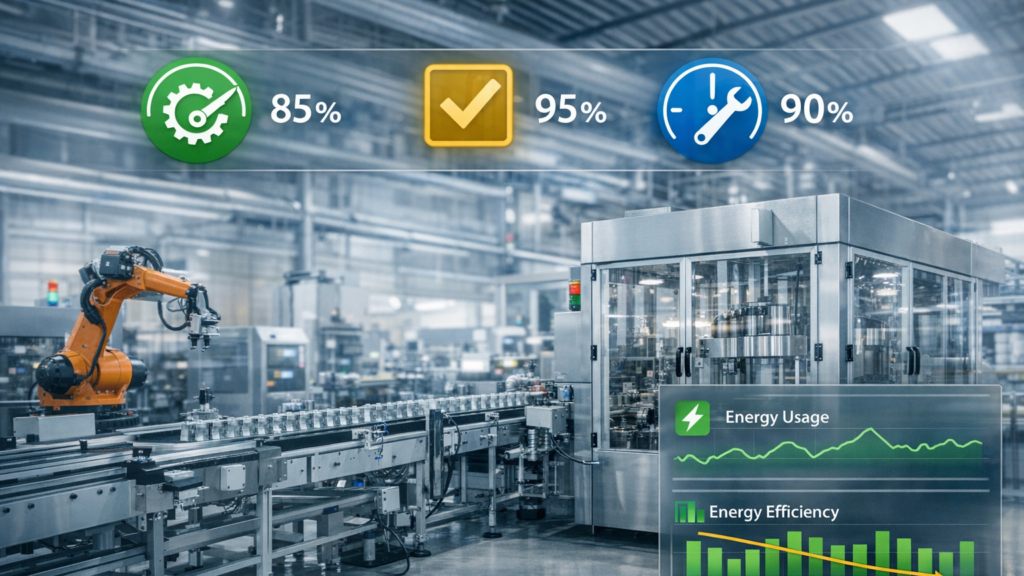

Manufacturing leaders increasingly face a dual imperative: raise Overall Equipment Effectiveness (OEE) while reducing energy use. Energy-aware OEE optimization aligns production performance with sustainability goals so plants run more reliably, cost-effectively, and with lower emissions. This article explains what energy-aware OEE means, which metrics to track, and how mid-size manufacturers, industrial enterprises, and automotive suppliers can implement pragmatic improvements.
What is Energy-Aware OEE Optimization?
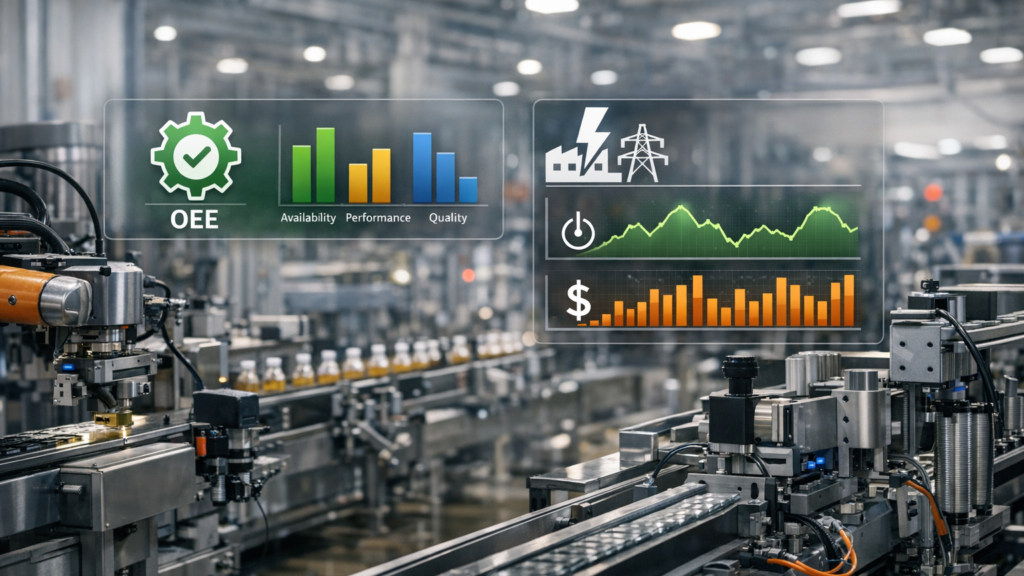
Energy-aware OEE optimization extends the traditional OEE framework — Availability, Performance, and Quality — by integrating energy consumption as a core constraint and KPI. Instead of optimizing purely for throughput, teams optimize for throughput per unit of energy or for minimizing energy waste while keeping OEE targets within acceptable ranges.
Why energy-aware OEE matters
- Cost reduction: Energy is a major variable cost. Reducing kWh per part improves margins.
- Regulatory and customer pressure: Sustainability compliance and green procurement criteria increasingly influence contracts.
- Operational resilience: Energy-efficient processes tend to be more stable and predictable.
- Brand and long-term strategy: Energy-aware operations support decarbonization targets and investor expectations.
Key metrics to track
Combine classic OEE metrics with energy KPIs to get a complete picture:
- OEE and its components (Availability, Performance, Quality)
- Energy per unit produced (kWh/part or kWh/kg)
- Specific energy consumption during idle and transient states
- Peak demand and demand charges
- Energy cost per production hour and per shift
- Carbon intensity where relevant (e.g., kg CO2e/kWh or per part)
Practical steps to implement energy-aware OEE
- Baseline measurement: Instrument equipment to capture cycle times, downtime causes, quality rejects, and energy usage at machine and line level. Start with a representative cell or line.
- Align KPIs: Add energy KPIs to daily production boards and dashboards. Use combined metrics like kWh per good part and OEE-adjusted energy intensity.
- Target idle-energy: Identify and reduce energy during idling, warm-up, and changeovers through shutdown policies, soft-standby modes, or aggregated sequencing.
- Optimize cycles: Tune machine parameters so optimal cycle time balances throughput and energy per cycle. Sometimes slightly slower cycles consume markedly less energy per part.
- Reduce start/stop frequency: Batch-changeover sequencing and minor scheduling shifts can cut transient energy spikes and reduce rejects.
- Preventive maintenance with energy signals: Use abnormal energy signatures to detect bearing wear, motor inefficiency, or electrical faults before failures and downtime occur.
- Peak-shave and load-shift: Where operationally possible, shift energy-intensive steps to off-peak tariffs or coordinate with on-site energy assets.
- Continuous feedback: Run A/B tests on parameter changes and compare OEE plus energy KPIs to validate improvements.
Technology and tools that help
Key enablers include:
- Energy monitoring at machine and circuit level (submetering)
- OEE and MES systems that accept energy inputs and produce combined dashboards
- Edge analytics and anomaly detection to flag energy deviations linked to performance drops
- Scheduling and sequencing software that considers energy costs and demand limits
- Predictive maintenance platforms that use energy signatures
Organizational practices and change management
Energy-aware OEE is both technical and cultural. Practical measures:
- Define clear ownership: combine production, maintenance, and energy teams under shared KPIs.
- Train operators: teach them to interpret energy signals and apply energy-saving standard work.
- Governance: include energy metrics in daily stand-ups and performance reviews.
- Pilot-and-scale: start small, prove benefits, then roll out across lines and sites.
Case examples and expected benefits
Typical, realistic outcomes from energy-aware OEE initiatives (figures vary by industry and base maturity):
- 5–15% reduction in energy per part after tuning cycles and reducing idle energy
- 2–8 percentage points improvement in OEE by cutting downtime linked to energy-related faults
- Lower peak demand charges through scheduling and load management
- Fewer quality rejects when energy-driven process instability is eliminated
Measuring ROI and continuous improvement
To quantify ROI, combine direct energy savings with increased output and reduced downtime. Use short, measurable pilots with clear baselines and monitor both financial and non-financial KPIs (emissions, uptime, scrap). Embed learnings into standard work and update targets as energy and production conditions change.
Common pitfalls and how to avoid them
- Avoid optimizing energy in isolation: changes must be assessed against OEE and quality to prevent unintended loss of throughput or higher scrap rates.
- Beware of poor measurement: inaccurate energy metering leads to wrong decisions. Start with reliable submetering on critical equipment.
- Don’t neglect change management: operator buy-in and clear procedures are essential for sustaining gains.
Energy-aware OEE optimization is a pragmatic pathway to combine productivity and sustainability. For mid-size manufacturers and enterprise plants alike, the approach reduces costs, supports compliance, and improves reliability. Start with focused pilots, instrument the right metrics, and scale improvements through governance and technology.
FAQ
How do I start an energy-aware OEE program with limited resources?
Begin with a single high-energy or high-impact line. Add basic submetering, capture OEE and energy KPIs, and run a short pilot to prove savings. Use low-cost analytics or spreadsheets initially, then scale to MES/analytics tools as ROI becomes clear.
Which equipment should be submetered first?
Prioritize machines with high energy use, frequent downtime, or historically high scrap rates. Ancillary systems (compressed air, ovens, pumps) are often good targets because they consume constant energy even during idle periods.
Can energy-aware OEE reduce downtime?
Yes. Tracking energy signatures helps detect developing faults (e.g., motor drag or bearing wear) before they cause breakdowns, enabling preventive maintenance that improves availability and OEE.
Will reducing energy intensity always lower throughput?
Not necessarily. Many energy reductions come from eliminating waste (idle energy, inefficient cycles) rather than slowing production. Where cycle changes affect throughput, assess the net effect on cost per part and overall OEE.
Ready to reduce energy costs while improving OEE? Contact our Services team to discuss a pilot tailored to your lines and production goals. Request an on-site assessment or a virtual review to identify quick wins and measurable KPIs.