This is office excellence, not production
automation.
Not everything is automated, what is automated is deliberate, governed, and measurable.
Reality Check
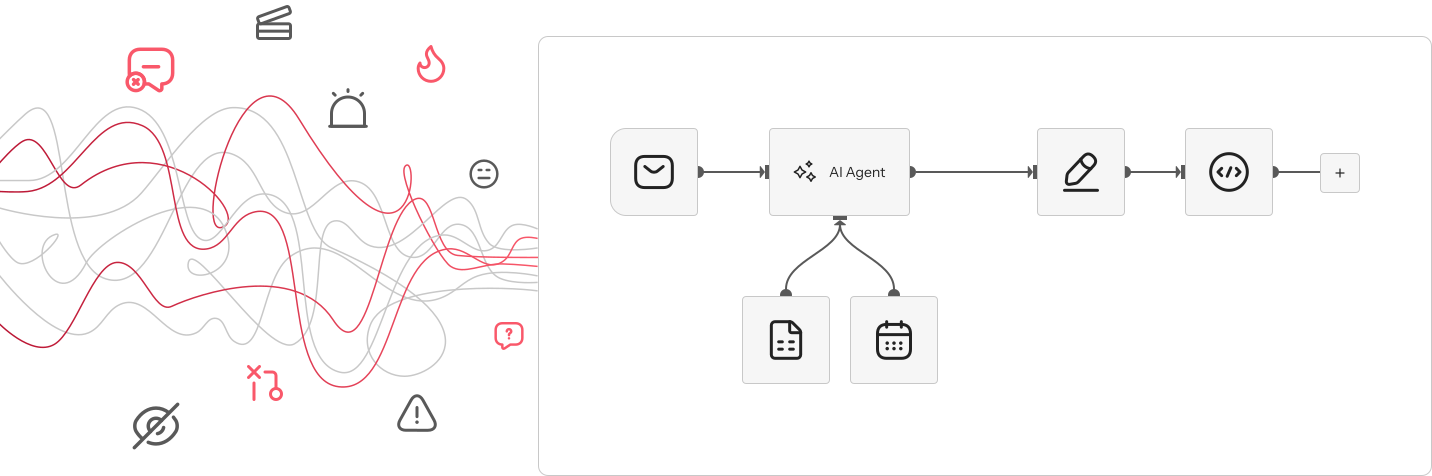
Most organizations don’t fail at automation itself; they fail when it scales. Without governance, automation becomes fragmented, ownership fades, manual work returns, trust in AI decisions erodes, and what once helped the business quietly turns into noise. BeLean Automation is built to prevent this from happening.
End-to-End Process Clarity
No automation is built until the full process is understood:
- Inputs, outputs, and value purpose of every step
- Human and system handoffs explicitly mapped
- Variants and edge cases identified upfront
Automation is applied to flows, not isolated tasks.
Defined Ownership
Automation without ownership degrades quickly. For every workflow, Sailrs defines:
- A business owner responsible for outcomes
- A technical owner responsible for stability
- Clear escalation paths when failures occur
Ownership is a live responsibility, not a setup artifact.
Contingency Plans
Every automation includes a defined Plan B:
- Temporary manual process when the workflow is unavailable
- Clear instructions for handling edge cases
- No single points of failure hidden inside scripts
This prevents operational paralysis when systems change.
Observable Flow Health
“It’s running” ≠ success. For each automation, we define:
- What failure looks like
- What delay looks like
- What partial success looks like
Errors, exceptions, and retries are visible and traceable.
Continuously Governed Automation
Automation is not “set and forget”. Sailrs establishes:
- Regular workflow reviews
- Input/output validation checks
- Monitoring when upstream APIs or data structures change
Breakage is expected. Silence is not.
How it helps organizations to:
What this typically unlocks across finance, HR, and operations teams is what BeLean Automation often leads to:
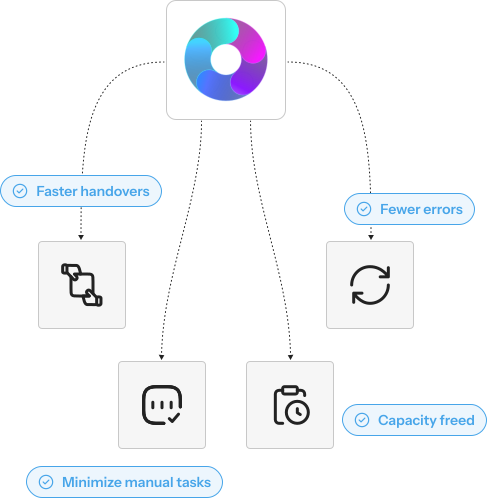
20–40% reduction in manual administrative effort in selected processes
Faster approvals and handovers
Fewer errors caused by re-entry and status chasing
Capacity freed for improvement and value-creating work
Exact impact depends on process complexity and system landscape
We make the work visible before promise results.
What this prevents as automation grows
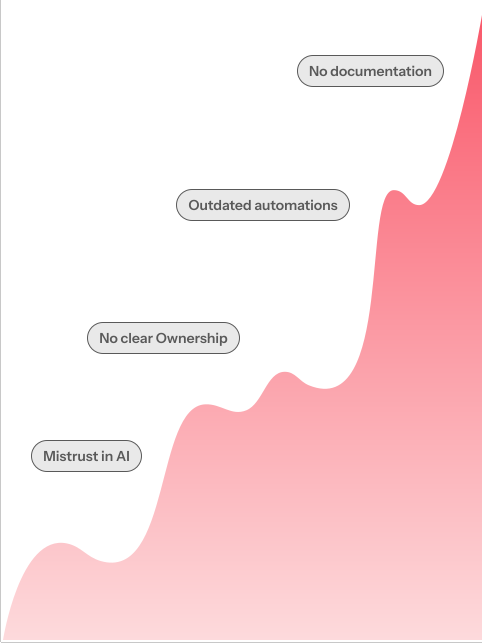
Most organization fail when automation scales.
Without governance, teams quickly face:
Dozens of undocumented automations
No clear ownership when something breaks
Manual work reappearing around “automated” processes
Growing mistrust in AI-driven decision
Automation that exist, but no longer helps the business.
BeLean Automation is designed to prevent this before it starts.
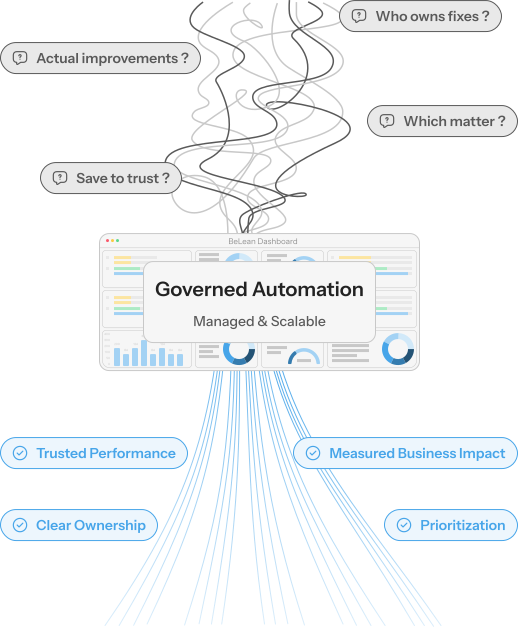
Automation without governance does not scale
As automation increases, new question appear:
Why do we have hundreds of automated workflows and still feel slow?
Which automations actually matter?
Who owns fixing them when they break?
Which ones are safe to trust?
How do we know this improved the business?
BeLean Automation explicitly addresses these issues.
We don't just automate processes. We help organizations scale with confidence.
Where BeLean Automation is applied
BeLean Automation is typically used in office and cross-functional processes such as:
Finance
Invoice handling, approvals, reporting
HR
Onboarding, data updates, document handling
IT & Shared Services
Request, escalations, handovers
Operations & Planning
Status consolidation, JPI preparation
Cross-system processes
Touching CRM, ERP, HR, finance and planning tools
What problem it solves
Reduce manual effort and administrative overhead
Shorten lead times in office processes
Reduce errors caused by re-entry and handovers
Increase process stability and reliability
Free capacity for improvement and value-creating work
Free Admin Friction Check
Start with a Admin Friction Check
Before automating anything, we make the work visible.