

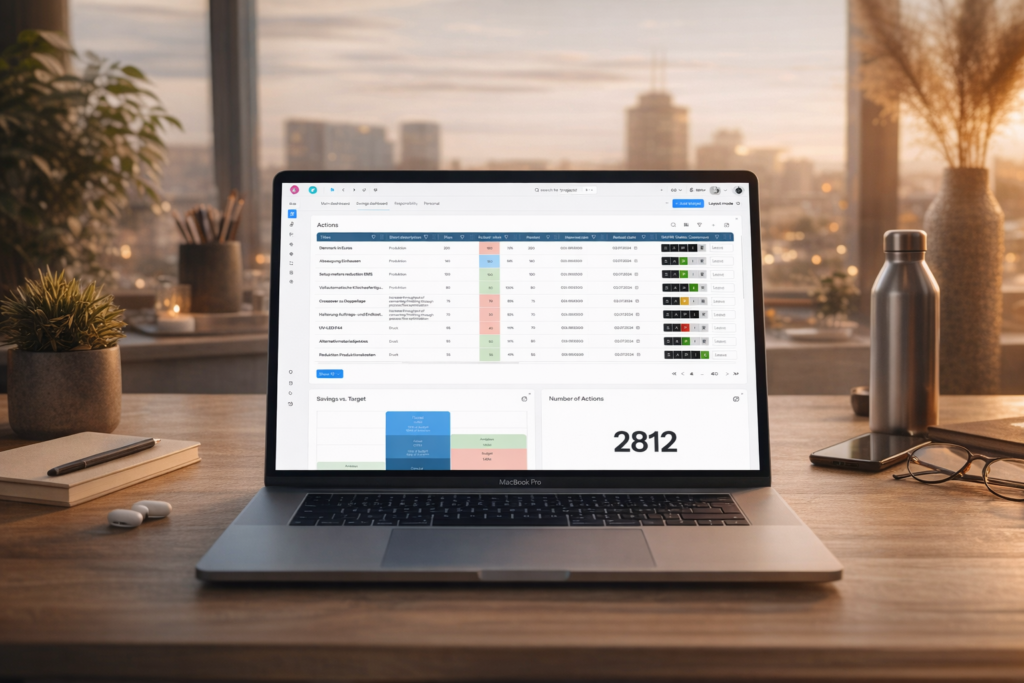


Continuous improvement (CI) programs in manufacturing and automotive settings depend on fast feedback, repeatable processes, and measurable outcomes. Low-code workflow automation accelerates CI by letting domain experts design, iterate, and deploy process improvements without waiting for traditional software development cycles.
Why continuous improvement needs low-code workflow automation
CI aims to reduce waste, increase throughput, and improve quality. Traditional IT projects are often too slow and expensive to support the fast cycle times CI requires. Low-code platforms shorten the distance between problem identification and solution deployment by enabling subject-matter experts to model workflows, automate steps, and capture data for analysis.

Key benefits for midmarket, industrial and automotive organizations
- Faster cycle time: Build and modify workflows in days or weeks, not months.
- Closer alignment with operations: Operators, engineers, and supervisors can prototype workflows that reflect shop-floor realities.
- Improved data quality: Automated forms, validations, and data capture reduce manual errors and enable better root-cause analysis.
- Lower cost of change: Reusable components and visual tooling reduce development effort for future improvements.
- Scalable governance: Centralized controls and role-based permissions let teams scale automation while maintaining compliance.
Common use cases
Low-code workflow automation fits many CI scenarios across manufacturing and automotive:
- Quality management: Automated nonconformance reports, CAPA workflows, and corrective action tracking.
- Maintenance and reliability: Triggered preventive maintenance checklists, downtime reports, and work-order routing.
- Production planning and changeovers: Standardized changeover procedures with step verification and sign-off.
- Supplier and incoming inspection: Automated inspection records, deviation workflows, and supplier feedback loops.
- Engineering change management (ECN/ECO): Controlled routing for approvals, traceability, and implementation tracking.
Selecting the right low-code platform: essential criteria
When evaluating platforms for CI initiatives, focus on:
- Ease of use: Visual workflow modeling, drag-and-drop forms, and templates so operational teams can contribute.
- Integration capabilities: Connectors for ERP, MES, PLCs, and common databases to automate data flows.
- Deployment flexibility: Cloud, on-premises, or hybrid options to meet security and latency requirements.
- Audit and compliance features: Versioning, audit trails, and role-based access for regulated industries.
- Extensibility: Support for custom code or APIs when visual building blocks are insufficient.
- Performance and scalability: Ensure the platform handles concurrent users and transactional volume typical for the site or enterprise.
Implementation roadmap: quick wins to scale
Adopt a phased approach that balances speed and governance:
- Identify quick wins: Choose processes with clear impact, limited integrations, and measurable outcomes (e.g., standardized shift handovers or inspection checklists).
- Run a focused pilot: Build the workflow with a cross-functional team, capture baseline metrics, and validate improvement.
- Define governance: Create guidelines for development, testing, deployment, and ownership. Limit production changes to controlled releases.
- Train citizen developers: Empower engineers and supervisors with role-based training and a library of reusable components.
- Measure and iterate: Use captured data to refine workflows and expand to related processes. Roll out in waves based on value and complexity.
Change management, governance, and measuring ROI
Technology alone won’t deliver CI. Combine automation with disciplined change management:
- Stakeholder alignment: Secure sponsor commitment and communicate expected benefits in measurable terms (cycle time, defect rate, labor hours).
- Training and support: Provide hands-on workshops and a lightweight ticketing model for issues and enhancement requests.
- Governance model: Define who can publish workflows, approve integrations, and access data.
- ROI tracking: Establish baseline KPIs, instrument workflows to capture outcomes, and report improvement at regular intervals.
Risks, limitations, and mitigation
Low-code tools accelerate delivery but have limitations to watch for:
- Shadow IT: Prevent uncontrolled deployments by enforcing governance and a catalog of approved apps.
- Integration complexity: Complex interfaces to legacy MES/ERP may require professional services; plan for phased integrations.
- Performance constraints: Test for concurrency and data volume to avoid bottlenecks in production environments.
- Vendor lock-in: Favor platforms with open APIs and exportable workflows to reduce dependency risk.
Checklist: How to start this quarter
- Select one CI use case with measurable baseline metrics.
- Form a cross-functional team with operations, quality, IT, and process engineering.
- Choose a low-code platform that meets integration and compliance needs.
- Build a pilot, measure results, and document lessons learned.
- Define governance, train citizen developers, and prepare a 90-day rollout plan.
Low-code workflow automation is a practical enabler of continuous improvement in midmarket, industrial, manufacturing, and automotive contexts. When paired with clear metrics, stakeholder alignment, and governance, it cuts the time from idea to implemented improvement and helps teams sustain gains.
FAQ
Which processes are best suited for low-code workflow automation in manufacturing?
Processes with well-defined steps, frequent repetition, manual handoffs, and measurable outcomes are best: inspections, maintenance checklists, nonconformance handling, shift handovers, and simple change-order approvals.
How quickly can a pilot deliver measurable results?
A focused pilot for a single, contained process can yield measurable results within 4–12 weeks, depending on integration needs and team availability.
Do I need IT involvement to use low-code platforms?
Yes—IT should define integration patterns, security, and deployment standards. But business and operations teams can design and iterate workflows with limited developer support.
What KPIs should we track for CI automation?
Common KPIs: cycle time reduction, defect rate, mean time to repair (MTTR), number of manual touches reduced, and labor hours saved. Track baseline and post-deployment values.
Ready to accelerate your continuous improvement program with low-code workflow automation? Contact your internal automation team or schedule a session with operations and IT to identify a first pilot process and gain quick wins this quarter.