

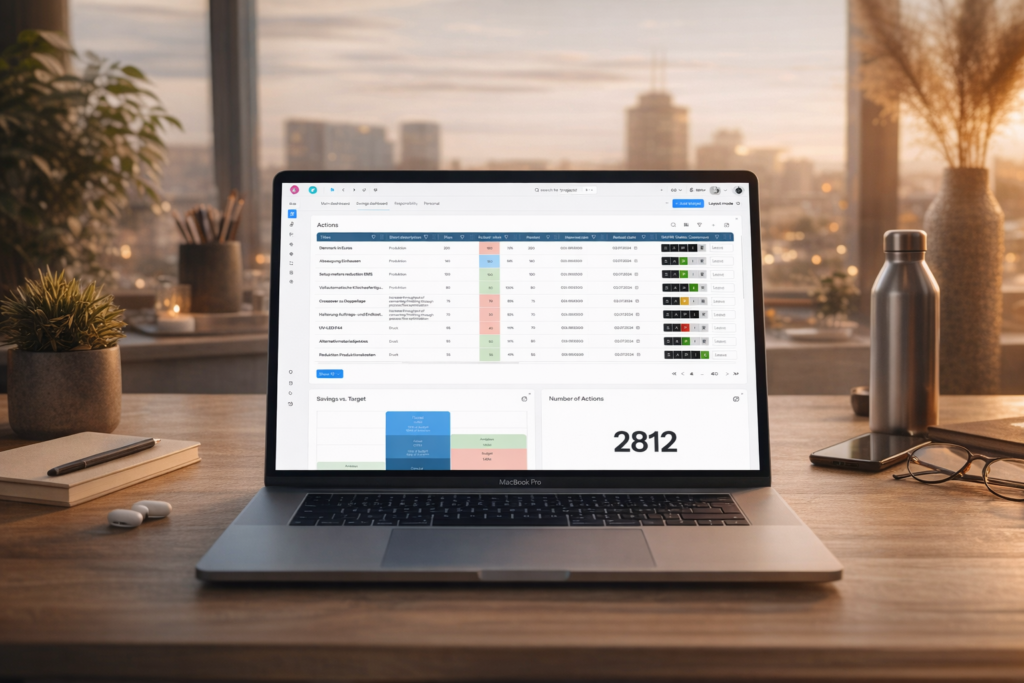


Companies across the spectrum — from Mittelstand firms to large enterprises and automotive OEMs — face growing pressure to meet green regulations (energy efficiency, emissions reporting, waste management, supply-chain sustainability). Manual processes slow response times, increase risk of errors, and make audits costly. Compliance automation focuses effort on exceptions, improves traceability, and reduces cost to comply.
Who benefits: tailored advantages by segment
- Mittelstand: Lower compliance overhead through standardized workflows and prebuilt templates for common regulations. Faster readiness for audits without hiring specialist staff.
- Industry & Produzierendes Gewerbe: Automated capture of production metrics (energy, material use), real-time alerts on thresholds, and centralized reporting across plants.
- Enterprise: Scalable policy engines, role-based controls, and audit trails to manage complex multi-jurisdictional requirements.
- Automotive: Supplier compliance tracking, embedded lifecycle assessments, and support for circular-economy requirements in design and sourcing.
Core capabilities to look for
- Regulation mapping and rule engine — translate legal requirements into machine-executable checks and workflows.
- Automated data collection — connect PLCs, meters, ERP, and supplier portals to gather required measurements and documentation.
- Centralized evidence store — immutable, timestamped records for audits and reporting.
- Alerts and exception management — notify owners when measurements deviate from permitted ranges and route issues through workflows.
- Reporting & disclosure — preformatted outputs for regulators, sustainability reports, and internal dashboards.
Step-by-step implementation roadmap
- Assess requirements: Inventory applicable regulations, reporting cadences, and data sources. Prioritize rules with frequent reporting or high penalties.
- Map data flows: Identify where required data lives today — machines, ERPs, supplier systems — and gaps that need bridging.
- Choose a focused pilot: Start with one site, one regulation, or one product line to limit scope and prove value fast.
- Build or configure: Implement rule engine, data adapters, dashboards, and evidence storage. Favor configurable modules over heavy customization.
- Validate & train: Run parallel checks against existing manual reports, involve compliance owners, and document procedures.
- Scale in waves: Expand to additional sites, rules, and suppliers after pilot success. Reuse connectors and templates to accelerate rollout.
Data and process priorities — where to start
Begin with high-frequency, high-impact data: energy consumption, CO2 emissions scopes 1–2, waste volumes, and supplier declarations. Automate collection of these metrics and create rule-based checks for completeness and plausibility. Next, automate routine documentation (certificates, test reports) and the retention policy for audit-ready evidence.

Technology options and integration notes
- Integration layer: Use connectors or APIs to pull data from SCADA/PLC, MES, ERP, and IoT platforms. For older equipment, use edge data collectors.
- Rule engine and workflow: Prefer solutions that support legal text mapping, versioning, and approval workflows. This reduces rework when regulations change.
- Reporting & analytics: Dashboards for operational owners and formatted exports for regulators. Ensure templates are auditable and reproducible.
- Security & governance: Enforce role-based access, immutable logs, and data retention aligned with legal obligations.
Common pitfalls and how to avoid them
- Over-automation: Automate what is repetitive and well-defined first. Leave judgment-based decisions to humans supported by clear exception workflows.
- Undercounting data sources: Conduct a thorough discovery; missing a supplier or a legacy system creates blind spots.
- Neglecting change management: Involve compliance, operations, and IT early. Provide clear training and run the automated system in parallel until trust is built.
- Lack of versioning: Regulations change. Track rule versions and keep historic evidence tied to the rule set in force at the time.
Measuring success: KPIs for green compliance automation
- Reduction in manual hours spent on compliance activities
- Time to produce regulator-ready reports
- Number of audit findings related to data completeness or traceability
- Percentage of suppliers providing machine-readable declarations
- Cost to comply per regulatory scope
90-day checklist
- Identify top 3 regulations by reporting frequency/penalty risk
- Map data sources and owners for those regulations
- Run a short pilot to automate one report and one alert
- Document workflows and assign exception owners
- Define KPIs and baseline current performance
Automation does not remove the need for expertise, but it changes the work: from repetitive filing to exception handling and continuous improvement. For Mittelstand and manufacturing, the right approach yields faster audits, lower compliance cost, and stronger evidence for sustainability claims. For enterprise and automotive, automation scales policy enforcement across sites and suppliers while preserving traceability.
FAQ
Which regulations should we prioritize for automation?
Prioritize regulations that require frequent reporting, carry high penalties, or demand cross-functional data (energy, emissions, waste, supplier disclosures). These yield the fastest operational benefit and risk reduction.
How long does a typical pilot take?
A focused pilot (one site, one regulation) commonly takes 6–12 weeks to implement, validate, and run in parallel with existing processes.
Can legacy equipment be included in automated data collection?
Yes. Edge data collectors or gateways can capture readings from legacy PLCs and sensors, forward data to the integration layer, and enable automated checks.
How do we handle changing regulations?
Use a rule engine with versioning so you can map changes to specific rule sets, track effective dates, and retain historical evidence aligned to the rules in force at the time.
Ready to reduce compliance risk and cost? Start with a focused pilot: map your top regulation, collect data from one site, and validate reports in 90 days. Contact your internal compliance lead or operations manager to begin.