

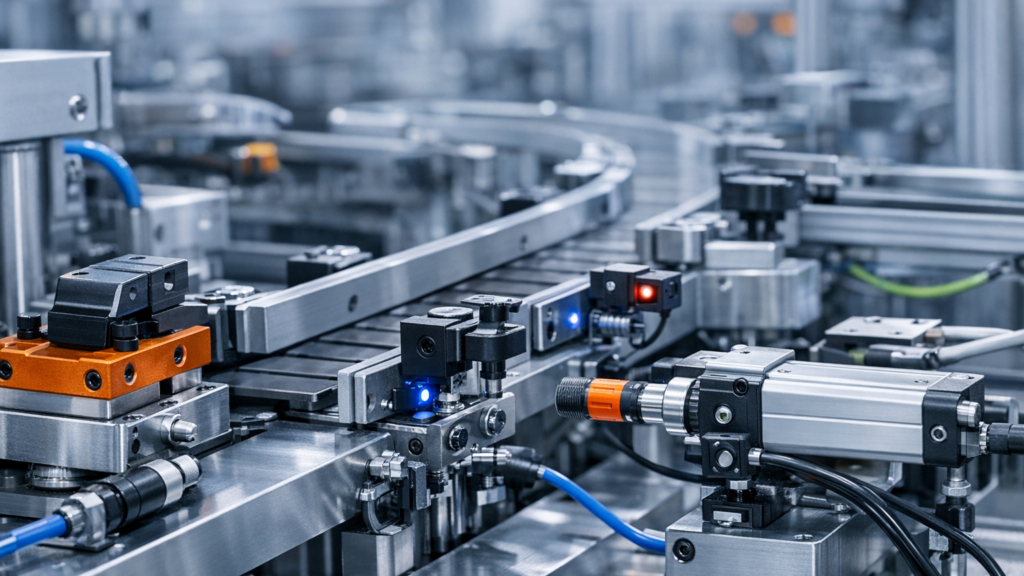

Changeovers are a predictable source of downtime and variability. Zero‑Touch Changeover — an autonomous extension of SMED (Single Minute Exchange of Die) — aims to reduce or eliminate manual interventions during setup so equipment can transition between jobs without operator input. The result: shorter, repeatable changeovers, higher availability and more flexible production schedules.
What is Zero‑Touch Changeover (Autonomous SMED)?
Zero‑Touch Changeover applies SMED principles with automation, smart tooling and data‑driven processes so changeovers occur with minimal or no human action. It combines:
- Process standardization and error‑proofing
- Automation of mechanical adjustments and IoT‑enabled checks
- Digital work instructions and machine orchestration
Why it matters: availability, OEE and cost impact
Faster, reliable changeovers directly improve:
- Availability: less planned downtime and faster recovery after product switches
- Performance: more production time per shift, reducing overtime and rush repro runs
- Quality: fewer setup errors and rework from incorrect adjustments
For SMEs and large manufacturers alike, these gains translate into better OEE, lower operating cost per unit and increased responsiveness to demand changes.
Key principles of autonomous SMED
- Separate internal and external setup steps; automate what’s internal when feasible.
- Standardize tooling, fixtures and interfaces to minimize unique adjustments.
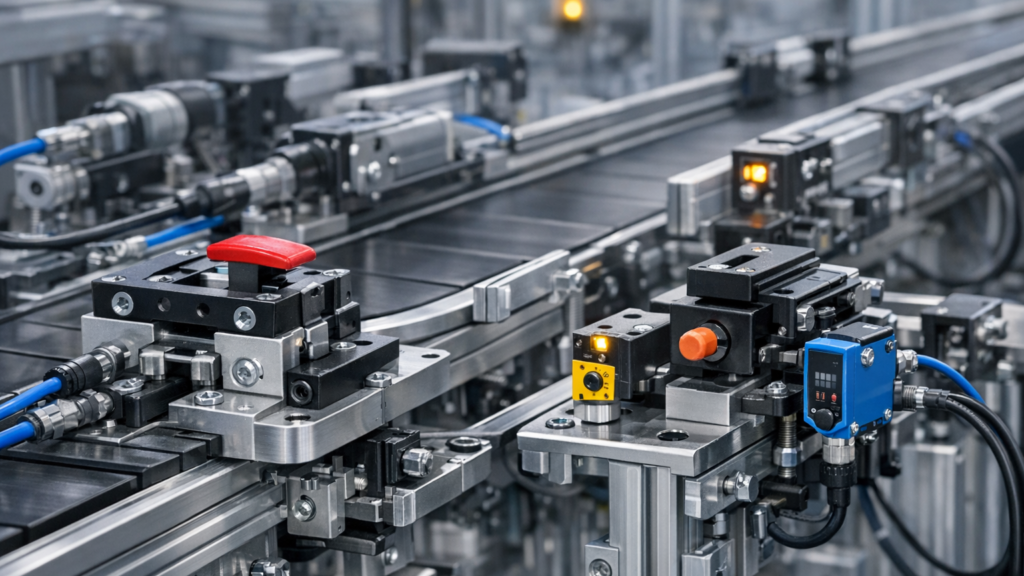
- Error‑proof (poka‑yoke) mechanical interfaces and use sensors to validate correct assembly.
- Digitize changeover procedures into guided sequences with decision logic.
- Orchestrate machines and peripherals so adjustments happen in parallel rather than sequentially.
Step‑by‑step approach to implement Zero‑Touch Changeover
- Baseline: map current changeover tasks, times and variability; capture who, what and where delays occur.
- Standardize: create a single best‑practice procedure per product family and eliminate unnecessary steps.
- Mechanize: redesign fixtures or interfaces to remove manual adjustments or enable quick‑change modules.
- Automate & instrument: add actuators, sensors and controllers to perform or verify actions automatically.
- Digitize: convert the standardized procedure into machine sequences and interactive operator guidance.
- Validate & iterate: run pilot changeovers, measure cycle times, and refine both hardware and sequence logic.
- Scale: roll out across similar lines with training, spare parts strategy and governance to sustain gains.
Technology and tools that enable autonomy
Focus on technologies that integrate reliably with existing assets and add measurable value:
- Low‑cost actuators and quick‑change clamps for mechanical tasks
- Sensors (presence, torque, vision) for verification and poka‑yoke
- PLC/edge controllers and standardized industrial communication (OPC UA where available)
- Digital work instructions and augmented reality for exception handling
- Orchestration logic to run parallel operations and coordinate peripherals
Choose solutions that are serviceable, maintainable and compatible with your spare parts and skills base — especially important for SMEs and mid‑market manufacturers.
Common pitfalls and how to avoid them
- Automating a bad process: standardize and optimize manually first, then automate.
- Over‑engineering: prefer simple mechanical changes to expensive robotic cells where sufficient.
- Lack of cross‑functional ownership: involve maintenance, production and engineering from the start.
- Poor validation: use real production conditions in pilots to reveal edge cases.
- Ignoring maintainability: design for serviceability and train staff on diagnostics.
Measuring success and continuous improvement
Track clear KPIs before and after implementation:
- Average changeover time and variability (standard deviation)
- Planned versus actual downtime attributed to changeovers
- OEE improvement and throughput gained
- Quality metrics tied to setup errors
- Maintenance effort and mean time to repair for changeover systems
Use these metrics to iterate: short feedback loops reveal which mechanical fixes, automation steps or digital changes deliver the highest ROI.
Practical use cases
Zero‑Touch Changeover is applicable across sectors:
- Automotive: quick‑release fixtures and automated die alignment reduce tool swap time on stamping or machining cells.
- Discrete manufacturing: changeable modular subassemblies let lines switch product families without manual jigs.
- Packaging and FMCG: automated format change kits and vision checks allow unattended fast format changeover.
- SMEs: incremental improvements — standardized fixture plates, audible/visual confirmations and simple actuators — often yield the best cost‑to‑benefit.
Next steps and organizational requirements
To implement Zero‑Touch Changeover successfully, you need:
- Executive sponsorship and a clear business case tied to OEE and capacity goals.
- Cross‑functional teams (production, maintenance, engineering, quality) and a pilot line.
- Structured project phases: diagnose, standardize, automate, validate, scale.
- Training and documentation to sustain improvements.
Start with a high‑frequency, high‑variance changeover where gains are visible quickly. Demonstrated wins build momentum for broader rollout.
Conclusion
Zero‑Touch Changeover extends SMED by combining mechanical design, automation and digital orchestration to make setups faster, repeatable and less dependent on operator skill. For manufacturers across SME, industrial and automotive sectors, it’s a pragmatic way to raise availability, increase flexibility and improve OEE without major capital disruption — when approached with disciplined process work, measured pilots and attention to maintainability.
FAQ
Is Zero‑Touch Changeover the same as SMED?
Zero‑Touch Changeover builds on SMED principles. SMED focuses on reducing internal setup time; Zero‑Touch adds automation, sensors and digital orchestration so many setup steps can occur without human intervention.
What size of company benefits from autonomous SMED?
Companies of all sizes benefit. SMEs often see quick wins by standardizing tooling and adding simple actuators, while larger enterprises can scale digital orchestration and robotics across lines for greater absolute gains.
How long does implementation typically take?
A pilot can show measurable improvement in weeks to a few months. Full rollouts depend on line count and complexity and often proceed in phases over 6–18 months.
Do I need to replace existing machines?
Not necessarily. Many gains come from retrofits: quick‑change fixtures, actuators, sensors and control logic. Full machine replacement is rarely required to achieve meaningful reduction in changeover time.
Which KPIs should I track?
Track changeover time and variability, OEE, downtime attributed to changeovers, quality rejects related to setup, and maintenance effort for changeover systems.
Ready to reduce changeover time and boost equipment availability? Contact your internal improvement or engineering team to start a pilot on a high‑frequency changeover today.